
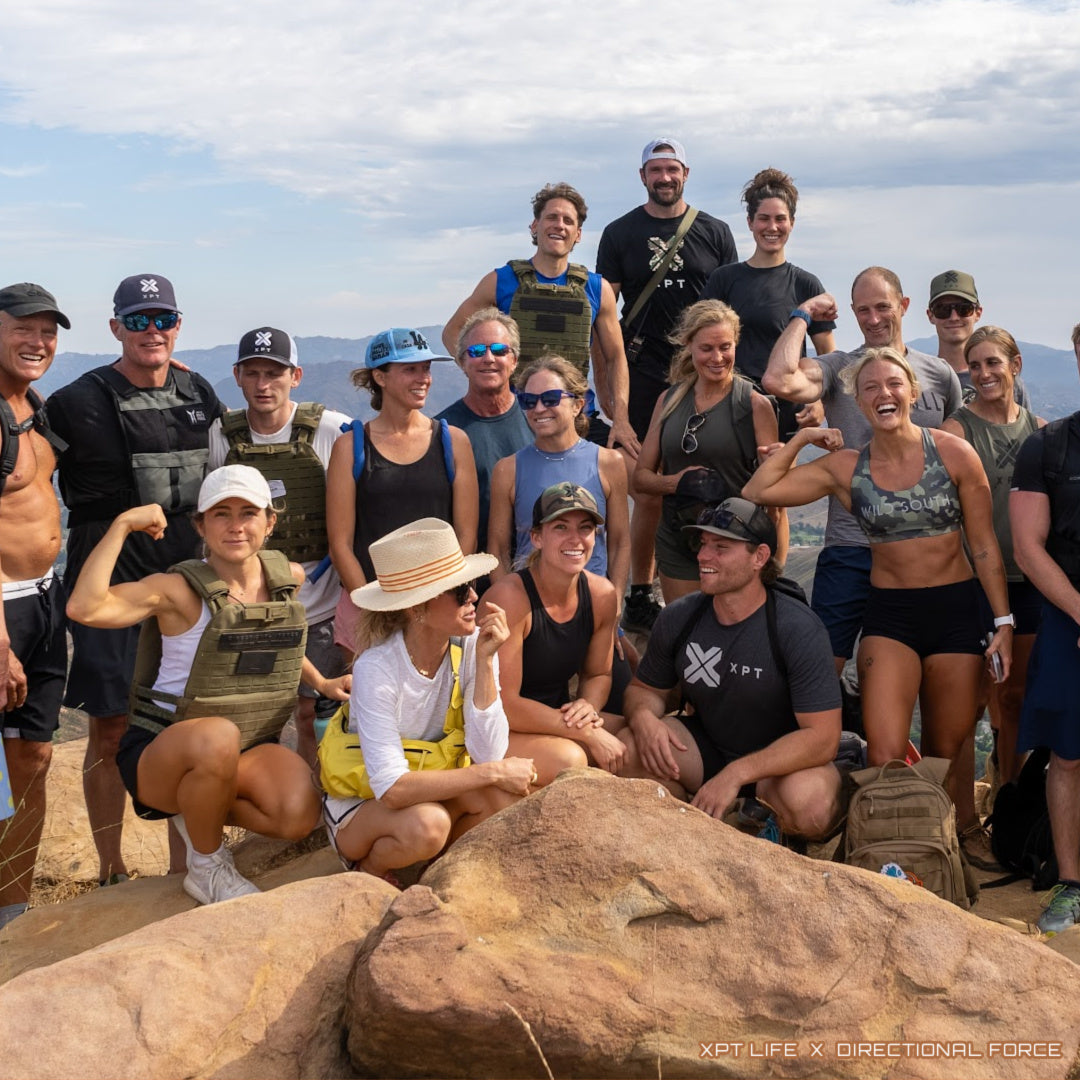
In a world full of complicated training programs and flashy gym gadgets, sometimes the most powerful tool is the simplest: walking with added weight. Rucking turns an ordinary walk into a full-body, calorie-crushing, resilience-building session that anyone can start today. Rooted in military conditioning but accessible to civilians, it's low-impact, scalable, and delivers outsized results in strength, stamina, and body composition.
You can ruck effectively with either a loaded backpack (traditional ruck style) or a weighted vest, each brings unique advantages. Both challenge your balance and core stabilization with the backpack being rear-loaded weight, while a weight vest distributes load evenly across the torso for better symmetry, posture support, and often greater comfort during shorter or hybrid sessions. Both amplify walking into serious training, making rucking a versatile force multiplier no matter your setup.
Whether you're chasing a calorie deficit for a leaner physique, building unbreakable endurance, or just wanting to level up daily movement, here's your complete guide to getting started, maximizing benefits (including vest-specific perks), and progressing smartly.
Why Rucking Delivers Massive Returns
Adding weight to your walks amplifies every step, creating compound benefits that regular cardio can't match:
- Accelerated Calorie Burn for Deficits: The extra load ramps up energy expenditure by 50-70% compared to unloaded walking. A 180-pound person can torch around 400+ calories per hour rucking versus 280 walking, making sustainable fat loss (1-2 lbs/week) easier when combined with a modest dietary deficit.
- Full-Body Strength & Muscular Endurance: Legs, glutes, core, back, and shoulders work harder to stabilize and propel the load, building functional strength without heavy lifting.
- Improved Bone Density & Joint Resilience: Controlled loading stresses bones positively, supporting long-term skeletal health and reducing osteoporosis risk. Vests provide more direct, even torso loading for enhanced spinal and hip benefits.
- Superior Cardiovascular Conditioning: Elevates heart rate and builds aerobic capacity with less joint stress than running.
- Better Posture & Core Activation: A well-fitted weight vest promotes upright alignment and constant core engagement with balanced front-to-back distribution—often feeling more natural and less straining on the shoulders or lower back than a backpack for many users.
- Mental Grit & Mood Elevation: The steady, purposeful effort fosters discipline, toughness, and endorphin release for sharper focus and reduced stress.
- Low-Impact Accessibility: Perfect for beginners, those recovering from injury, or anyone wanting high returns without high pounding.
Weight vests excel for balanced load, shorter rucks, bodyweight-integrated workouts, and even running intervals.
Getting Started: Gear & Fundamentals
Keep it simple - no exotic setups required.
-
Essential Gear:
- A quality adjustable weight vest for even torso distribution and comfort.
- A durable backpack for traditional rucking.
- Supportive shoes (trail or hiking styles) and moisture-wicking socks to avoid blisters, break them in gradually.
- Hydration pack or bladder: Essential for hands-free water access, checkout our DF95 Molle Hydro-Pack, to stay ahead of thirst. Sip regularly, especially on longer efforts. Add electrolytes for sessions over 60 minutes or in heat to maintain performance and prevent cramps.
-
Starting Weight:
- Beginners: 5-10% of body weight (e.g., 10-20 lbs for most). Vests often feel smoother at lower weights due to symmetry.
- Prioritize form over ego - finish challenged but recovered.
-
Technique Checklist:
- Stand tall: Shoulders back, chest open, core braced.
- Avoid forward lean; let natural arm swing counterbalance.
- Maintain a brisk but conversational pace (you should speak full sentences).
- Start on flat pavement or trails; introduce hills later. Vests allow more upright posture naturally.
-
Progression Rule:
- Increase only one variable per week: weight, distance, time, speed, or terrain.
- Train 2-3 times per week with rest days in between.
-
Safety First:
- Listen for joint discomfort or posture breakdown, scale back if needed.
- Consult a physician if you have pre-existing back, neck, or joint concerns.
Sample Rucking Workouts to Build Momentum
Beginner Phase (Weeks 1–4) – Build the habit. 2–3 sessions/week.
- Session 1: 2 miles @ 10–15 lbs (vest or pack). Aim for 17–20 min/mile pace on flat ground.
- Session 2: 2.5 miles @ same weight. Add gentle inclines if feeling strong—vests handle inclines smoothly.
- Session 3: 3 miles, keep weight conservative. Focus purely on consistent form.
Intermediate Phase (Weeks 5+) – Ramp intensity. 3 sessions/week.
- Steady-State Effort: 3–5 miles @ 20–35 lbs. Target 15–18 min/mile. Use a vest for balanced comfort on longer steady paces.
- Interval Style: 10-min warm-up unloaded → 3 min brisk / 2 min recovery pace for 40–50 min total. Vests pair great here for even load during speed changes.
- Terrain Challenge: 4 miles with hills or trails @ 25–40 lbs. Every mile: pause for 20 bodyweight squats + 10 push-ups (vest stays on for added resistance).
Fat-Loss Focus Protocol: 3–4 rucks/week (mix distances 3–6 miles) + daily walks. Pair with 300–500 calorie deficit via nutrition for steady, sustainable results.
Complementary Exercises to Amplify Results
Pair rucking with these to target weak points and boost overall calorie burn—weight vests integrate seamlessly:
- Post-Ruck Leg Burners: Walking lunges or step-ups (mimic hill effort for glutes/quads—vest adds constant load).
- Core & Upper Body Finishers: Planks, push-ups, or farmer carries (vest enhances activation without removing gear).
- Full-Body Add-Ons: Every 1–2 miles, drop for 15–20 air squats or 10 push-ups to spike heart rate and muscle activation.
Rucking isn't flashy, it's foundational. Load up (vest or pack), step out, hydrate relentlessly (hydration pack on deck), and let consistent effort compound into real transformation. In the pursuit of peak performance, sometimes the biggest multiplier is simply moving with purpose and added resistance - whether balanced across your torso or powering through with a classic ruck.
Get after it. Force Multiply every step and constantly cultivate the best version of yourself.
Directional Force – Cultivate Your Hustle, Discipline, and Self-Belief 💪🏼
Disclaimer: Consult a fitness professional before starting any new workout, especially if you have pre-existing injuries. Listen to your body and adjust weights or reps as needed. Always consult a healthcare provider before starting any workout program or physical activity to make sure that you're healthy enough.
The content contained in this article is for information purposes only, and is not meant to be a substitute or replacement for professional advice and medical consultation. It is just shared as information only, and with the understanding that Directional Force, LLC, (Directional Force) is not engaged in the provision or rendering of medical advice or services whatsoever. You unilaterally understand and agree that Directional Force shall not be liable for any claim, loss, or damage arising out of the use of, or reliance upon any content or information in this article or any article provided by Directional Force. Please seek professional medical advice prior to engaging in, or undertaking any of the content, exercises, advice, and workouts provided by Directional Force.