
Table of Contents
- Yes, You Can Do Push-Ups With a Weighted Vest (Here's How)
- What You Need Before You Start
- How to Perform a Weighted Push-Up Correctly
- Weighted Vest Push-Ups Benefits for Upper Body Strength
- How Much Weight Should You Start With?
- Choosing the Best Weighted Vest for Push-Ups
- Weighted Vest Push-Ups vs Bench Press: Which Builds More Strength?
- How to Increase Push-Up Strength Without Adding Weight
- Common Mistakes to Avoid With Weighted Push-Ups
- Frequently Asked Questions
Last Updated: November 9, 2026
Yes, You Can Do Push-Ups With a Weighted Vest (Here's How)
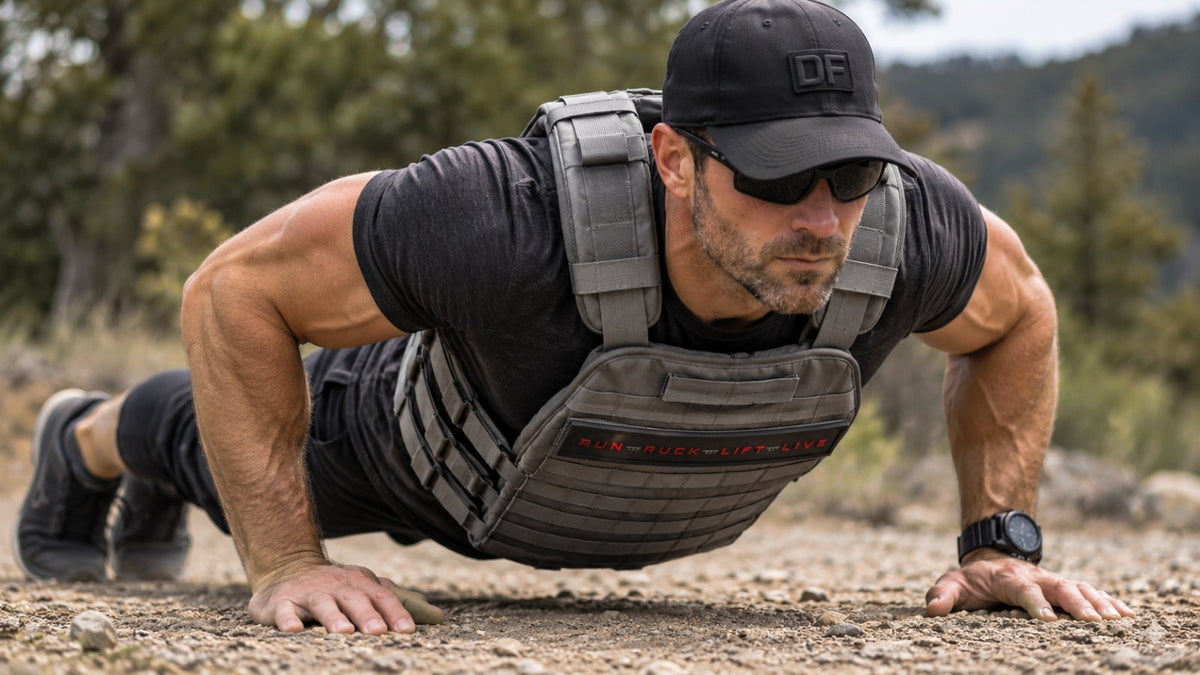
Can you do push ups with a weighted vest? Yes, and it is one of the simplest ways to add real load to a bodyweight staple, which is why lifters keep asking can you do push ups with a weighted vest once standard reps feel easy.
Push-ups respond to progressive overload like any other lift. Once the standard version feels easy, a vest adds resistance without changing the pattern.
What You Need Before You Start
Before strapping on weight, tick a few boxes. Skipping them is the fastest way to a tweaked shoulder.
- A clean set of 10-15 strict push-ups. If you cannot control your bodyweight, added load will expose the weakness fast.
- A snug vest. A loose vest shifts on every rep and pulls your shoulders out of position. Fit matters more than the number on the label.
- A flat, non-slip surface. Hard floors with a mat work best.
The American Council on Exercise guide to push-up form is a solid refresher on the base movement. Nail the unweighted version first.
How to Perform a Weighted Push-Up Correctly
Good weighted push-ups start with a stable base: hands, feet, and torso working together before the first rep.
Setup and Hand Placement
Set your hands slightly wider than shoulder width, fingers spread, and wrists stacked under the elbows. Squeeze the glutes and brace the core so the body moves as one unit.
Hand position changes the load. A wider grip shifts stress to the pectoral muscles. A narrower grip brings the triceps brachii and anterior deltoids into play.

Empowering The Change Weight Vest Training
The Rep: Eccentric, Pause, Concentric
Control the descent. The eccentric phase is where most of the muscle damage and growth signal happens, so do not drop. Lower until the chest is a fist's width from the floor, pause for a beat, then drive up without letting the hips sag.
Keep the elbows at roughly 45 degrees from the torso. Flaring them to 90 degrees puts needless stress on the shoulder joint.
Weighted Vest Push-Ups Benefits for Upper Body Strength
The main benefit is straightforward: more load on a movement you already own. That means more mechanical tension per rep and a clear path to upper body hypertrophy.
- Higher training volume per set. The same rep count now carries more total work.
- More core stabilization. The load sits on the torso, so the trunk works harder to stay rigid.
- Better carryover to real-world strength. Rucking, carrying, and field work all reward a strong, stable trunk.
For first responders and military personnel, that carryover matters. A weighted push-up builds pressing strength that holds up under a pack. The NSCA guidance on progressive overload explains why adding load in small steps beats adding reps forever.
How Much Weight Should You Start With?
Start lighter than your ego wants. A 10 lb plate pair is a sensible first step for many people, and you should train at that load for two to three weeks before adding more.
The reason is anatomical. A weighted vest loads the torso, and that load transfers through the shoulder girdle, wrists, and lumbar spine, which adapt more slowly than the chest and triceps.
Joint-by-Joint Load Tolerance
- Wrists. They should stay stacked under the elbows, not bent back. A sharp ache in the wrist extensors after a set means the load is too high or your hand position is off. Reduce load or use parallettes to keep the wrist neutral.
- Shoulders. The anterior deltoid and rotator cuff take the brunt of the eccentric phase. Elbows at roughly 45 degrees keep the shoulder in a safer plane; flaring to 90 degrees under load stresses the joint capsule. If you feel pinching at the front of the shoulder, drop the weight and check your elbow angle.
- Lower back. A sagging midline under load compresses the lumbar spine. If your hips drop or your lower back arches on the way up, the load is too heavy for your current core stability. Brace as if bracing for a punch, and keep the ribs down.
Signs You Are Ready to Add Load
- All reps stay clean through the full range of motion with no joint discomfort
- The last two reps of each set still look controlled and do not slow dramatically
- Your wrists, shoulders, and lower back feel the same the day after as they did before the session
Signs You Moved Too Fast
- Hips sag or pike on the way up
- Elbows flare out under fatigue
- Wrists ache after the session or the next morning
Watch out: adding weight every session because the first set felt easy is the most common way people tweak a shoulder. Give the joints two to three weeks at each load before stepping up.
Load management is the whole game here. Readers ready to pick a starting load can browse 10 lb vest plates to begin light, then step up to 20 lb plates once the base is solid.


Choosing the Best Weighted Vest for Push-Ups
The best weighted vest for push-ups is one that stays tight against the torso and does not shift when you lower into the bottom position.
- Adjustable fit. Padded straps and a waist system keep the vest locked down through the full range of motion.
- Even weight distribution. Plates that sit flat against the chest and back stop the vest from swinging forward.
- Durable build. A vest that tears under load is a safety problem, not just an annoyance.
The Harvard Health overview of resistance training safety makes the same point: stable equipment supports better exercise technique.
Directional Force builds vests for exactly this kind of work. The Centurion Weight Vest Gen2 Phoenix Tiger Stripe uses heavy-duty nylon, padded shoulder straps, and an adjustable Velcro waist system to hold the load tight during dynamic movement.
What most reviews miss is how much a loose vest changes the movement. A shifting load forces your stabilizers to fight the vest instead of the rep.
Weighted Vest Push-Ups vs Bench Press: Which Builds More Strength?
Neither wins outright. Bench press lets you load far heavier and is easier to progress in small increments. Weighted push-ups build strength that transfers to bodyweight and field tasks, with more core involvement.
Here is the honest comparison:
Factor |
Weighted Vest Push-Ups |
Bench Press |
|---|---|---|
Load ceiling |
Limited by vest capacity |
Very high |
Core demand |
High |
Low to moderate |
Equipment needed |
Vest and floor space |
Bench and barbell |
Joint stress |
Shoulder and wrist |
Shoulder and elbow |
Best for |
Field strength, endurance |
Max pressing power |
For a lifter chasing a big bench number, the barbell wins. For an athlete who needs pressing strength that holds up under a pack, the vest earns its place.
How to Increase Push-Up Strength Without Adding Weight
Sometimes the vest stays in the closet. Plenty of ways exist to make push-ups harder without adding a pound.
- Slow the tempo. A five-second descent raises time under tension.
- Pause at the bottom. A two-second pause kills momentum and builds strength out of the hole.
- Elevate the feet. Decline push-ups shift load to the upper chest and shoulders.
Training volume still needs a plan. Three to four sets of 8-15 reps, two or three times a week, gives most people room to recover.
Common Mistakes to Avoid With Weighted Push-Ups
The mistakes are predictable, and most come down to too much load too soon or a vest that will not stay put.
Vest Fit and Stabilization Errors
A loose vest is not just annoying; it changes the movement. When the load shifts on every rep, your stabilizers fight the vest instead of the rep, and your shoulders get pulled out of position.
- Shoulder straps too loose. The vest slides down toward your neck at the bottom of the rep. Tighten the straps so the top of the vest stays put when you lower.
- Waist system not engaged. A Velcro waist belt keeps the lower edge of the vest from swinging forward. If your vest has one, use it.
- Plates not seated flat. Plates that rattle or sit at an angle shift the load asymmetrically. Seat them flat against the chest and back panels before every session.
Watch out: a vest that shifts during the eccentric phase forces your rotator cuff to work overtime to control the load. If you feel the vest move on every rep, stop and fix the fit before adding weight.
Warm-Up Protocols for Weighted Calisthenics
A standard bodyweight warm-up is not enough when you are about to load the shoulder girdle. The joints and connective tissue need more preparation than the muscles alone.
- Band pull-aparts and scapular retraction drills. Two sets of 15 to wake up the upper back and rotator cuff.
- Wrist circles and wrist extensions. Ten reps in each direction, plus a few light wrist extension stretches, to prepare the wrists for the stacked position.
- Plank holds with the vest on. Two 30-second holds to let your core feel the load before you move through a range of motion.
People often warm up with bodyweight push-ups, then jump straight into their working weight. Bridge the gap with a light set at your working weight before your first hard set.
Programming Integration Errors
Weighted push-ups slot into an existing plan as a pressing movement, not an add-on. Treat them like any other lift, with planned sets, reps, and rest.
- Do not add them to an already heavy pressing day. If you bench press and overhead press in the same session, weighted push-ups are redundant volume. Swap one pressing movement for weighted push-ups rather than adding them.
- Count them as your horizontal press. In a push-pull-legs or full-body routine, weighted push-ups can replace standard push-ups or a bench variation for the horizontal press slot. Three to four sets of 8-15 reps, two or three times a week, gives most people room to recover.
- Do not train them to failure every session. Leaving one or two reps in reserve keeps the joints fresher and lets you recover for the next pressing day.
Other Common Form Mistakes
- Skipping the bodyweight base. A vest on top of sloppy form just makes sloppy form heavier.
- Letting the hips sag. A sagging midline under load stresses the lower back.
- Flaring the elbows. Wide elbows under weight stress the shoulder joint.
Watch out: stacking plates into a vest before the bodyweight rep is clean is the single most common way people tweak a shoulder. Build the base first, then load it.
Adding load to push-ups is simple on paper and easy to get wrong in practice. The lifters who get the most from it treat the vest as a tool for progressive overload, not a shortcut.
Frequently Asked Questions
Is it a good idea to do push-ups with a weighted vest?
Yes, provided you can already do 12 to 15 clean bodyweight push-ups. Adding load increases mechanical tension on the pectoral muscles, triceps brachii, and anterior deltoids, which drives upper body hypertrophy and strength. Start light, keep reps in the 6 to 12 range, and stop the set when your form breaks. If your hips sag or your elbows flare wide, the weight is too heavy for that rep range.
How much weight should I start with for weighted push-ups?
Most trained lifters start with 8 to 12 lbs, roughly 5 to 10 percent of body weight. If you can do 15 strict bodyweight push-ups, add 8 lbs and aim for 8 to 10 reps. When you hit 12 clean reps at that load, move up. The Centurion vest's plate pockets support 10-50 lbs per pair, so you can scale your load over time.
How do weighted vest push-ups compare to bench press?
Both build pressing strength, but they stress the body differently. Bench press lets you load heavier absolute weight and isolates the chest with back support. Weighted push-ups add core stabilization and scapular retraction demands because your trunk holds the plank. Many athletes use both: bench for max strength, weighted push-ups for endurance and trunk control.
Are there risks to wearing a weighted vest during push-ups?
The main risks are wrist and shoulder joint stress from too much load too soon, and lower back sag if your core cannot hold the plank. Keep the vest snug so it does not shift, warm up the shoulders and wrists first, and cap loading at a weight that lets you keep a straight line from head to heels. Anyone with a history of shoulder impingement should clear weighted pressing with a clinician before adding load.
