
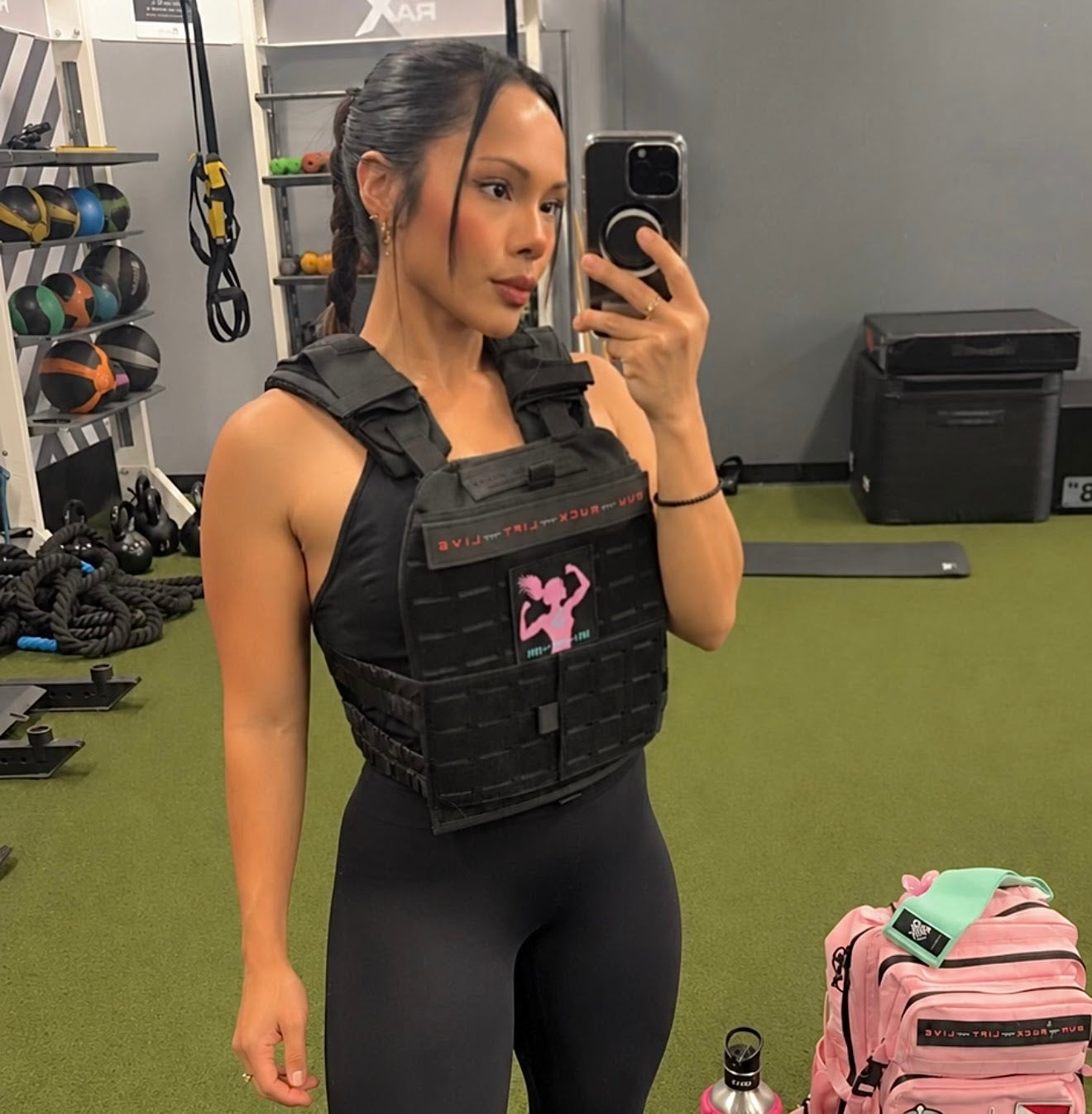
By Patricia Muego, Registered Nurse, mom of three, and coach with over a decade of experience in fitness and human performance. Tricia, is a Directional Force Advocate who helps women align their habits, mindset, and identity to create real, lasting change.
When most people think of getting stronger, they picture barbells, squat racks, or a fully equipped gym. The truth? You can build functional strength, improve endurance, and challenge your entire body right from home with one simple tool: a weight vest.
- Adding external load to movements you already perform increases the challenge without needing a room full of equipment. Whether you’re short on time, travel frequently, or simply prefer home workouts, a weight vest can elevate your training while supporting long-term health.
Why Train with a Weight Vest?
A quality weight vest isn’t just about making workouts harder, it’s about making them more effective.
Research suggests weighted exercise can help:
- Increase muscular strength and endurance
- Burn more calories than bodyweight training alone
- Improve cardiovascular fitness
- Support bone density by placing healthy mechanical stress on the skeleton
- Enhance balance, stability, and functional movement patterns
Build resilience for everyday activities
The key is progressive overload, gradually challenging your body so it continues adapting over time.
Coach’s Tip: Focus on mastering movement quality before increasing the load.
- Full-Body Weight Vest Workout
- Warm-Up (5 minutes)
- Bodyweight squats × 15
- Arm circles × 30 seconds each direction
- World’s Greatest Stretch × 5 per side
- Walking lunges × 10 per leg
- High knees × 30 second
Workout
Complete 3–4 rounds, resting 60–90 seconds between rounds.
1. Vest Squats
2–15 reps
Targets: Glutes, quads, hamstrings, and core.
Sit your hips back, keep your chest tall, and drive through your heels as you stand.
2. Push-Ups
8–15 reps
Modify by elevating your hands on a bench or couch if needed.
Targets the chest, shoulders, triceps, and core.
3. Reverse Lunges
10 reps per leg
Step back with control, lightly tap the knee, then drive through your front heel to return.
Great for improving single-leg strength and stability.
4. Bent-Over Rows
12 reps
Using resistance bands or dumbbells if available.
If no equipment is available, perform slow isometric towel rows anchored around a sturdy object.
Targets the upper back and improves posture.
5. Step-Ups
12 reps per leg
Use stairs, a sturdy bench, or a secure platform.
Drive through the working leg rather than pushing off the back foot.
6. Plank Shoulder Taps
20 total taps
Maintain a stable torso and resist rocking your hips.
Excellent for core strength and shoulder stability.
Finisher
Complete 3 rounds:
30 seconds Mountain Climbers
30 seconds Jump Squats (or Bodyweight Squats for a lower-impact option)
30 seconds Rest
Cool Down
Spend 5 minutes stretching:
Hip flexors
Hamstrings
Glutes
Chest
Shoulders
Finish with slow, controlled breathing to lower your heart rate.
Make Progress
Once this workout begins feeling easier, increase the challenge by:
Adding another round
Increasing repetitions
Slowing the lowering phase (3–4 second eccentric)
Shortening rest periods
Increasing vest weight gradually
Remember: progress doesn’t come from doing more every day—it comes from consistently challenging your body over time.
Final Thoughts
One of the biggest myths in fitness is that you need a gym membership to get stronger. A weight vest proves otherwise. With just your body, a small amount of space, and consistent effort, you can improve strength, cardiovascular fitness, bone health, and overall function from the comfort of your home.
Disclaimer: Consult a fitness professional before starting any new workout, especially if you have pre-existing injuries. Listen to your body and adjust weights or reps as needed. Always consult a healthcare provider before starting any workout program, physical activity, or taking any supplement to make sure that you're healthy enough.
The content contained in this article is for information purposes only, and is not meant to be a substitute or replacement for professional advice and medical consultation. It is just shared as information only, and with the understanding that Directional Force, LLC, (Directional Force) is not engaged in the provision or rendering of medical advice or services whatsoever. You unilaterally understand and agree that Directional Force shall not be liable for any claim, loss, or damage arising out of the use of, or reliance upon any content or information in this article or any article provided by Directional Force. Please seek professional medical advice prior to engaging in, or undertaking any of the content, exercises, advice, and workouts provided by Directional Force.