
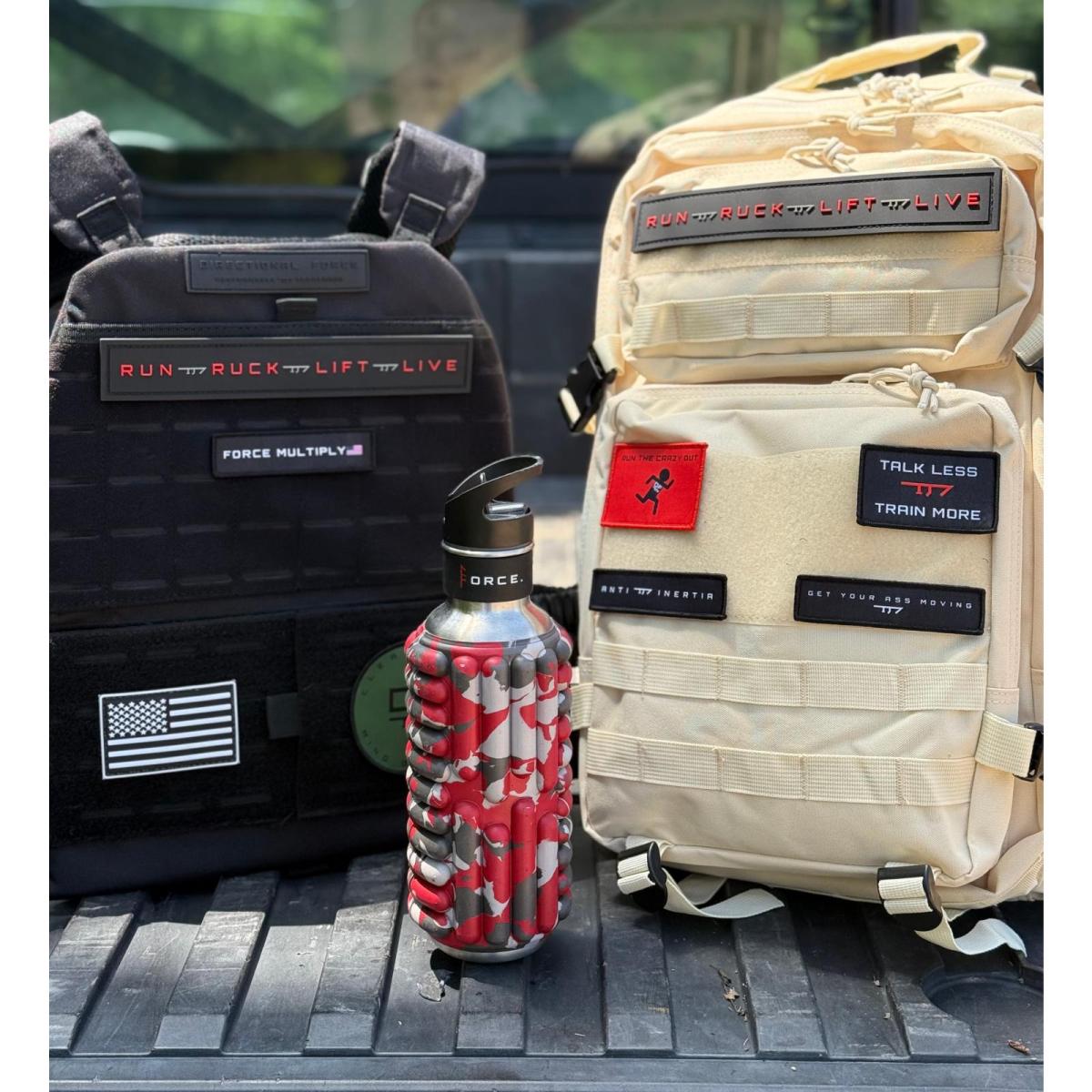
Quick Summary
For most fitness rucks, what size ruck pack do I need is a pack between 15 and 25 liters, which holds plates, layers and water. Beginners usually do best in the 20 to 25 liter range. Pack volume in liters measures the space inside the bag, not how much weight it can carry.
- Most fitness rucking packs fall between 15 and 25 liters.
- Beginners usually do best with a pack in the 20 to 25 liter range.
- Pack volume is space inside the bag, not its weight capacity.
- Add 20 to 30 percent headroom to your gear volume when choosing a pack.
- Start with a light load and add small increments over several weeks.
Table of Contents
- How Pack Size Is Measured and Why Liters Matter
- Choosing a Ruck Pack Size for Beginners
- How Much Weight to Ruck With as You Progress
- Using a Ruck Weight Calculator to Estimate Your Capacity
- Rucking Backpack With Weights: Plates, Fit and Load Stability
- Matching Pack Size to Your Rucking Scenario
- Choosing Your Ruck Pack Size and Starting Your First Ruck
- Frequently Asked Questions
How Pack Size Is Measured and Why Liters Matter
Last Updated: November 4, 2026
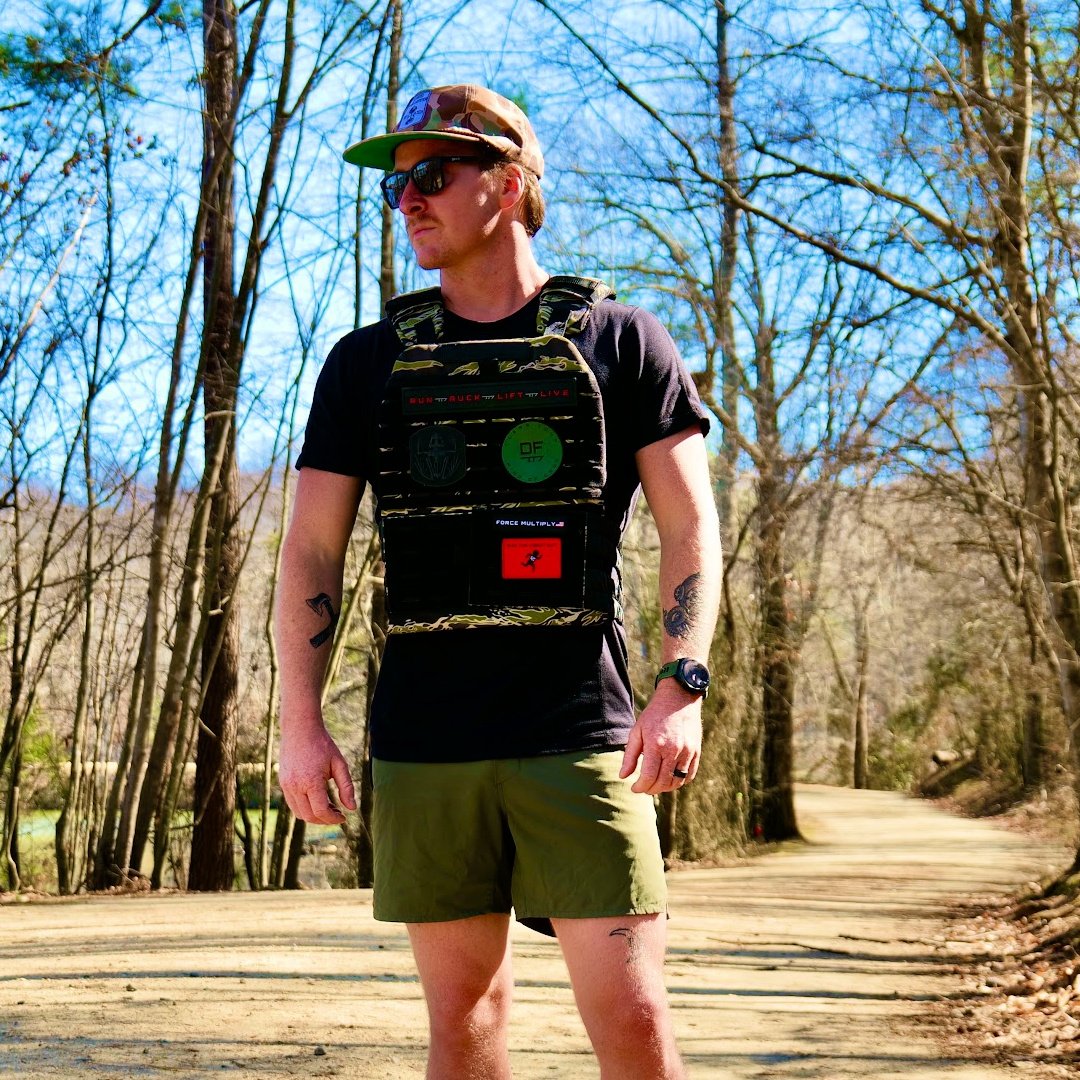
Choosing a ruck pack starts with one number: its volume in liters, and that is the first step in working out what size ruck pack do I need for your sessions. Most fitness rucking packs fall between 15 and 25 liters. That range covers plates, layers, and water for most daily sessions. Knowing what the liter figure means helps you avoid buying too much or too little space.
Pack volume is the space inside the bag, not the weight it can carry. A 25-liter pack can hold a lot of gear, but it does not tell you how much weight it can safely carry. Those are two separate decisions.
Liters matter because they set how much you can pack without overstuffing. An overstuffed pack shifts its load, rubs your back, and makes every step feel heavier.
- Under 15 liters: Fits a water bottle, a light layer, and a snack. Too small for plates.
- 15 to 25 liters: Fits plates, layers, water, and basic essentials for fitness rucks.
- Over 25 liters: Suits longer day hikes with extra gear, but often adds unneeded bulk.
Choosing a Ruck Pack Size for Beginners
When you are wondering what size ruck pack do I need as a beginner, a pack in the 20 to 25 liter range usually works best. That size leaves room for water, a layer, and a plate pair without forcing you to overload the bag. The Overwatch Ruck Pack - 45L is available from Directional Force, though its listed capacity is 45 liters.
Think about what you will carry on a normal session. If you only need water and a light jacket, a smaller pack works. If you plan to add plates, lean toward the upper end of the range.
A common mistake is buying a large pack "just in case." Extra space tends to get filled, and then the bag rides heavier than it needs to.
Start with a smaller load and build up. A ruck done with a modest pack and a light weight teaches you more than a heavy first attempt that leaves you sore for days. For a full beginner plan that covers weight, gear, and blister prevention, read How to Start Rucking for Fitness: A Beginner's Guide.
For a quick reference, the article's pack-size guidance for beginners comes down to a few key figures.
| Pack or load | Figure from article | Note |
|---|---|---|
| Typical fitness ruck pack | 15 to 25 liters | Covers plates, layers and water |
| Beginner pack | 20 to 25 liters | Room for water, a layer and a plate pair |
| Under 15 liters | Water bottle, light layer, snack | Too small for plates |
| Over 25 liters | Longer day hikes | Often adds unneeded bulk |
| Gear headroom | 20 to 30 percent | Extra room for easy packing |
| Short fitness ruck | 10 to 15 liters | 30 to 60 minutes, fair weather |
| Standard fitness ruck | 15 to 20 liters | 60 to 90 minutes, mixed terrain |
How Much Weight to Ruck With as You Progress
Start light and increase weight slowly. Many people begin with a weight that feels like a real effort without changing how they walk. Add small amounts over several weeks, not all at once.
Plates should sit close to your back and stay centered. Adding weight to a pack that already holds a full load raises the risk of strain.
- Week 1 to 2: Use a light starting weight on a short route.
- Week 3 to 4: Add a small increment if your posture and pace hold steady.
- Later: Increase only when a session feels manageable, not punishing.
Using a Ruck Weight Calculator to Estimate Your Capacity
Most ruck weight calculators tell you how much weight to carry, not how many liters you need. That is a critical distinction: weight is about load, while liters are about volume. To estimate capacity from your actual gear, you need a simple volume budget, not a weight calculator.
Start by listing everything you plan to carry on a typical ruck: plate or weight, water, layers, food, phone, keys, and any safety items. Then assign a rough volume to each item. You do not need exact measurements, approximate ranges work well.
- Weight plate: A standard 10 lb plate is roughly 1.5 to 2 liters in volume; a 20 lb plate is about 2.5 to 3 liters. Plate shape matters: curved or contoured plates take up more space than flat ones.
- Water: A 1-liter bottle takes about 1.2 liters of pack space once you account for the bottle walls and air gaps. A 2-liter bladder typically needs 2.5 liters of compartment volume.
- Layers: A lightweight windbreaker compresses to about 1 liter; a fleece or insulated jacket takes 3 to 5 liters.
- Food and small essentials: A day's snacks, phone, keys, and a small first aid kit add roughly 2 to 3 liters.
Add these up. For example, a 10 lb plate (2 L) + 2 L water (2.5 L) + windbreaker (1 L) + essentials (2 L) = about 7.5 liters of gear. That leaves plenty of room in a 15-liter pack, but if you add a 20 lb plate (3 L) and a fleece (4 L), you are at 11.5 liters and a 15-liter pack becomes tight once you account for the pack's own structure and air space.
A common pattern is to add 20 to 30 percent headroom to your gear volume to allow for easy packing and load compression. So if your gear totals 12 liters, look for a pack in the 15 to 18 liter range. If it totals 18 liters, a 20 to 25 liter pack gives you comfortable margin.
Watch out: Do not rely on a weight calculator to size your pack. A calculator might suggest a 30 lb load, but if your gear only fills 12 liters, a 25-liter pack will let the load shift unless you use compression straps. Always match the pack volume to the gear volume, not the weight alone.
For a more precise estimate, physically gather your gear and pack it into a box or a borrowed pack. Measure the space it occupies. This low-tech method beats any online calculator for accuracy.
Rucking Backpack With Weights: Plates, Fit and Load Stability
A rucking backpack with weights needs a plate pocket that holds the plates flat against your back. Loose plates shift with each step and throw off your balance. A padded plate pocket keeps the load stable and easier to carry over distance.
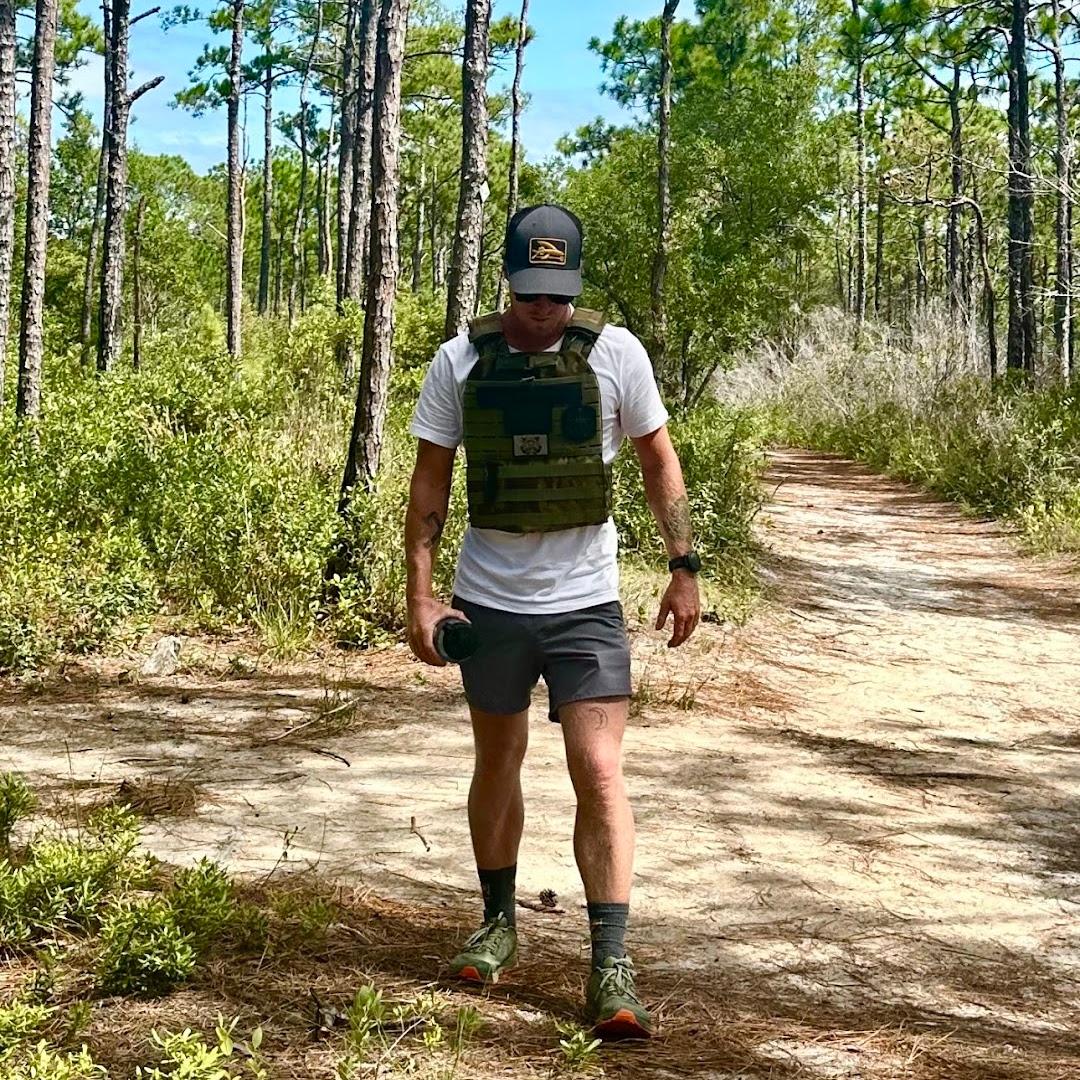
Fit matters as much as volume. Check that the shoulder straps and waist strap let the pack sit high and close to your body. A pack that hangs low pulls your shoulders forward.
The Motivator Ruck Pack includes large padded plate pockets with an additional internal compartment for extra weight plates.
- Choose a pack with a padded plate pocket.
- Confirm the straps adjust well for your torso.
- Keep plates centered and close to your back.
Matching Pack Size to Your Rucking Scenario
Your rucking scenario, duration, terrain, weather, and whether you ruck for fitness or function, should drive your pack size more than any generic recommendation. A short fitness walk and a multi-hour mountain ruck demand very different volumes. Use this scenario matrix to translate your typical outing into a liter range.
Short fitness ruck (30-60 minutes, flat or rolling terrain, fair weather): 10-15 liters. You need space for a plate, a water bottle, and a light layer. A 10-liter pack works if you carry a small plate and minimal water; 15 liters gives breathing room for a jacket or extra water.
Standard fitness ruck (60-90 minutes, mixed terrain, variable weather): 15-20 liters. Add room for a shell, gloves, a snack, and a 2-liter water bladder. A 20-liter pack handles a 20 lb plate plus layers without overstuffing.
Commute or everyday carry with training (daily, urban, 30-60 minutes): 20-25 liters. You need separate compartments for work items and ruck plates, plus space for a laptop or shoes. Look for a pack with a padded plate pocket and an external access pocket so you are not unpacking everything at the office.
Day hike with rucking (2-4 hours, varied terrain, full weather exposure): 25-35 liters. This range accommodates a plate, 2-3 liters of water, food, a first aid kit, a rain shell, and a warm layer. A 30-liter pack is a common choice for half-day outings.
Long or multi-hour ruck (4+ hours, remote terrain, all-weather): 35-45 liters. You are carrying extra water, insulation, emergency supplies, and possibly a stove or shelter. The D1 Quantum Ruck-Backpack is a 45-liter option for this scenario.
Overnight or expedition rucking: 45-65 liters. This is beyond typical fitness rucking and requires a pack designed for heavy loads with a robust frame and hip belt.
A common mistake is sizing up for a scenario you rarely do. If 90 percent of your rucks are 45-minute fitness walks, buy for that scenario and rent or borrow a larger pack for the occasional long hike. Extra volume on a daily pack invites overpacking and load shift.
Watch out: A larger pack does not automatically make long rucks easier. If you buy a 45-liter pack for a 60-minute fitness ruck, the empty space lets the plate slide unless you cinch compression straps tight. Match the pack to your most frequent scenario, not your most ambitious one.
For a quick decision, ask yourself three questions: How long will I be out? What will I carry beyond a plate and water? What is the weather likely to do? The answers point directly to a liter range.
Choosing Your Ruck Pack Size and Starting Your First Ruck
Pick a pack in the 20 to 25 liter range, load it lightly, and build from there. That combination gives most beginners enough space and a manageable first session.
On your first ruck, keep the route short and the pace easy. Pay attention to your shoulders, hips, and feet. If anything hurts beyond normal muscle fatigue, shorten the next session.
Start with what you have, add weight slowly, and upgrade the pack when your training calls for it. Directional Force provides ruck packs and American-made plates designed for demanding training environments.
Frequently Asked Questions
Is a 30 pound ruck enough?
For most beginners, a 30 pound load is a sensible starting point. Rucking builds endurance mainly through time on your feet and pace, so consistency matters more than heavy loads. Start with a weight you can carry for 30 to 60 minutes with steady form, then add small increments over several weeks. If the pack shifts, pinches your shoulders or forces you to lean forward, reduce the load and focus on fit before adding more weight.
Is a 20L or 30L ruck pack better for beginners?
A 20 to 25 liter pack suits most beginners who carry plates, a layer, water and a few essentials. A 30 liter pack gives more room for extra layers or food on longer outings, but it can encourage overpacking and empty space that lets the load move. Choose the smallest size that fits your gear with a little room to spare, and check that the pack sits comfortably on your torso before buying.
Can I use a regular backpack for rucking?
Yes. You can start rucking with any backpack you already own rather than buying a purpose-built pack first. Look for a bag with a snug fit, padded straps and a stable back panel that keeps weight close to your body. Upgrade to a dedicated ruck pack later if you need plate pockets, a more secure load or better weight distribution for heavier training.
How should a ruck pack fit?
A ruck pack should sit high on your back with the weight close to your spine and the hip belt resting on your hip bones. Torso length matters more than the stated liter capacity, so check the pack's torso range before buying. The shoulder straps should hug your shoulders without digging in, and the load should not swing when you walk. If you can't tighten the pack so it stays still, the size or fit is wrong for you.
