

Last Updated: November 8, 2026
Quick Summary
Look for a ruck pack that carries both a plate and a laptop without either compromising the other: a padded plate pocket against the back panel, a separate padded laptop sleeve, capacity matched to your daily load, and a waist strap that puts weight on your hips. Confirm weather protection and repairability before buying.
- A 25L pack typically fits a laptop, lunch, and a light layer with room to spare.
- Load the pack to actual commute weight and walk ten minutes before committing to it.
- A waist strap should carry weight on the hips, not the shoulders.
- Start with a light plate and add load only after a full week feels unremarkable.
- Check that buckles and zippers are standard sizes a local repair shop can replace.
Table of Contents
- Rucking Goals and Intended Use Shape Every Other Decision
- The Best Backpack for Commuting to Work Balances Load and Laptop
- Comfort and Ergonomic Fit Under a Weighted Load
- Why a Commuter Backpack Waterproof Build Protects Electronics
- When a Commuter Backpack 25L Makes More Sense Than a 45L Ruck
- Choosing a Rucking Backpack with Weights: Plates, Stability and Progression
- Durability, Organization and Long-Term Maintenance
- Pick Your Ruck and Load It for Tomorrow's Commute
- Frequently Asked Questions
Rucking Goals and Intended Use Shape Every Other Decision
The first question to answer is what the ruck pack is actually for. A ruck pack for daily commuting is a load-carrying system that must do two jobs at once: move training weight safely and protect the work gear a commute requires. Most buying guides treat those as separate purchases.
This guide starts where every sensible gear decision starts: with the job.
Fitness Rucking vs. Work-First Carry
Fitness rucking prioritizes plate retention, load stability, and a harness that holds weight high and close to the spine. Work-first carry prioritizes laptop protection, organization, and a profile that fits under a seat or in a locker.
A pack optimized purely for one will compromise the other. Readers still deciding whether weighted walking belongs in their routine can start with how to start rucking for fitness before committing to a heavy setup.
Commute-Specific Capacity and Weight Calculations
Capacity math is simpler than most people make it. Add up the daily load: laptop and charger, lunch, a change of clothes, water, and the plate.
- A 25L pack typically swallows a laptop, lunch, and a light layer with room to spare.
- A 45L pack carries the same load plus a plate, shoes, and a full change of clothes.
- Plate weight is separate from pack volume. A pack does not get bigger because the plate is heavier.
Anyone unsure where they land should work through a practical guide on what size ruck pack is right before buying.
The Best Backpack for Commuting to Work Balances Load and Laptop
The best backpack for commuting to work keeps the heavy load against the back panel and the fragile load isolated from it. Plates belong in a padded pocket closest to the spine.
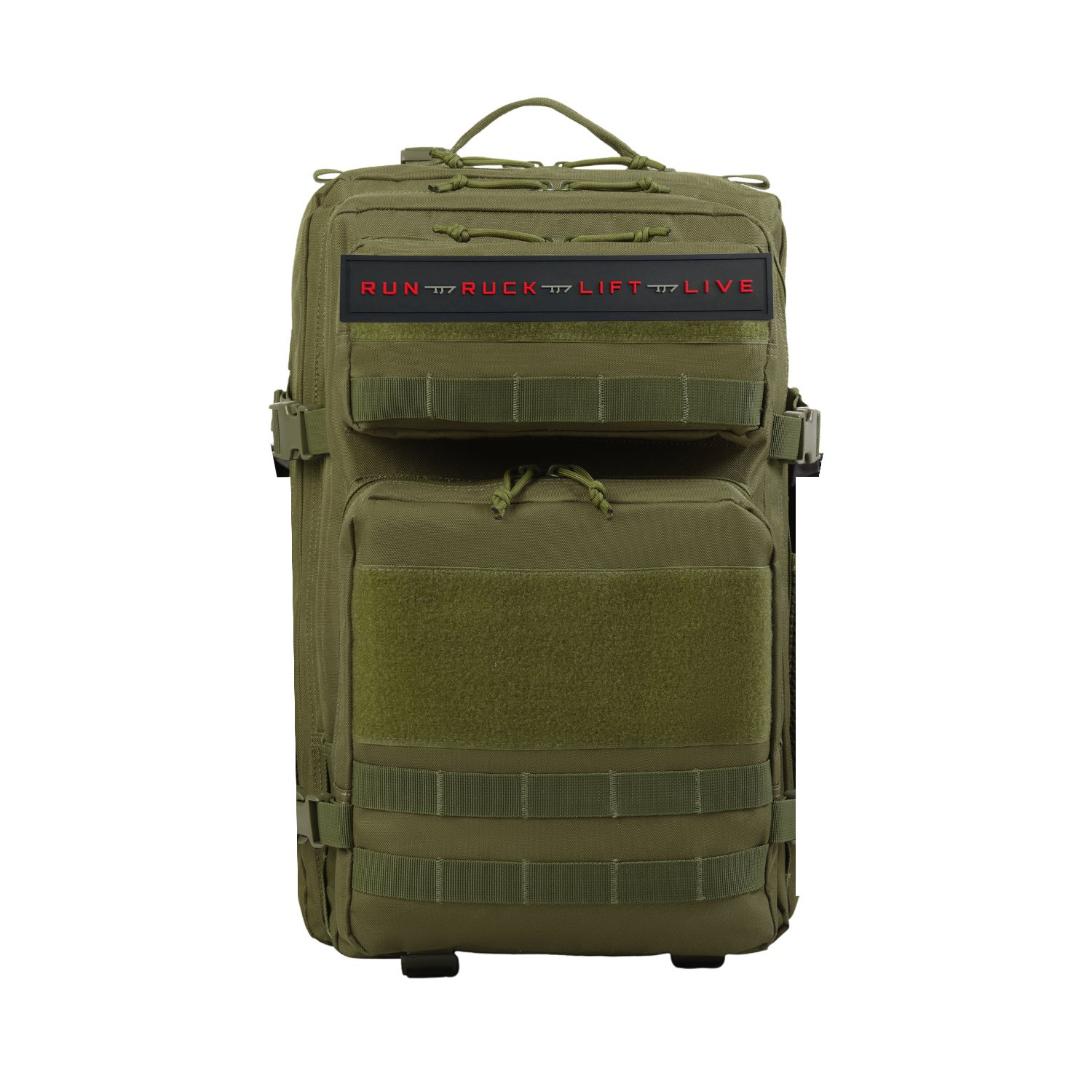
Laptop Protection Without Sacrificing Plate Space
Packs with multiple interior compartments make this easier, because the plate pocket stays dedicated and the work gear stays organized.
Comfort and Ergonomic Fit Under a Weighted Load
Comfort is not padding, it is load distribution. A well-padded shoulder strap that carries all the weight will still hurt by mile two. The harness should transfer load to the hips through a waist strap, keep the pack tight to the back, and stay stable when the wearer turns or steps off a curb.
A Practical Fit and Load-Testing Checklist
Run this test before committing to a pack for a weighted commute:
- Load the pack to the actual commute weight, plate included
- Tighten shoulder straps until the pack sits high and close to the spine
- Fasten the waist strap and confirm it carries weight on the hips, not the shoulders
If the pack shifts or the straps dig in during that ten-minute walk, it will not improve over a longer commute. Injury prevention matters here too, and guidance on how to prevent shin splints when rucking is worth reading before adding weight to a walking commute.
Why a Commuter Backpack Waterproof Build Protects Electronics
A commuter backpack waterproof build is the difference between a wet jacket and a dead laptop. Rain, spilled coffee, and wet platforms are routine on a commute, and electronics fail fast when moisture reaches them. But "waterproof" is used loosely in pack marketing, and the label alone tells you very little. The useful question is how the pack keeps water away from the laptop compartment on a real wet morning.
Water-Resistant Fabric vs. Waterproof Construction
The practical test is simple: check the shell material, check whether the zippers are covered by a storm flap or outer cape, and confirm the laptop compartment is padded and separated from any wet gear. Then look at the seams around the laptop sleeve and the base of the pack, those are the first places water enters.
When a Rain Cover or Internal Dry Bag Earns Its Place
A rain cover is useful when the pack is water-resistant rather than waterproof, when the commute involves sustained rain rather than a short dash, and when the laptop compartment shares space with wet gear like a rain shell or damp shoes. An internal dry bag or roll-top stuff sack adds a second barrier around electronics and is the more reliable option when a laptop must stay dry in heavy rain.
Electronics-Specific Weather Checks
- Confirm the laptop sleeve has a raised false bottom so a wet surface does not wick moisture into the compartment.
- Check that the laptop compartment closes with a flap or covered zipper rather than an exposed coil zipper.
- Keep wet gear in a separate compartment or dry bag, never loose against the laptop sleeve.
When a Commuter Backpack 25L Makes More Sense Than a 45L Ruck
A commuter backpack 25L wins for anyone whose daily load is a laptop, lunch, and a light layer. It fits under a seat, moves easily on public transportation, and does not swing wide in a crowded carriage.
The trade-off is honest: the 25L will not carry a plate comfortably alongside a full work load, and the 45L feels oversized on a short walk with almost nothing in it. Commuters who want the larger option can see the 45L ruck pack as a reference point for what that capacity actually looks like.

Choosing a Rucking Backpack with Weights: Plates, Stability and Progression
A rucking backpack with weights lives or dies on plate retention. The plate pocket must be padded, sized to the plate, and positioned against the back panel so the weight sits high and close. Loose plates shift on every step, which is uncomfortable and destabilizing. Laser-cut MOLLE webbing and reinforced handles add utility without adding bulk.
Safe Progression for Adding Weight to a Daily Commute
Start with a light plate and add load only when the current weight feels unremarkable for a full week of commutes. Increase in small steps, keep the waist strap fastened, and back off if the shoulders or lower back complain. Packs designed around plates, like The Motivator Ruck Pack, make that progression straightforward because the plate pocket is built for the job.

Durability, Organization and Long-Term Maintenance
Durability comes down to materials and stitching. Ballistic nylon, 900D nylon, and waterproof Oxford polyester resist abrasion. Reinforced stitching at strap anchors and handle joints is where cheap packs fail first. Zippers should be heavy-duty and covered. But a pack used every workday for years is judged less by its spec sheet than by how it wears and whether it can be kept in service.
Where Daily-Use Packs Actually Wear Out
A common pattern is that the first failures appear at the points that flex every day: the shoulder-strap anchors, the handle joint, the base of the pack where it is set down on platforms and floors, and the zipper pulls and sliders on the most-used compartments. Abrasion shows up on the bottom panel and the back panel where it rubs against clothing.
Cleaning, Care, and What to Check Seasonally
Maintenance is minimal but not zero. Rinse the shell with water, use a mild soap for stains, and air-dry the pack fully before storing it, trapped moisture is what causes odor and coating breakdown. Empty and wipe the laptop compartment, and keep wet gear out of it. Seasonally, check strap stitching, zipper function, and the base panel for thinning. A pack that is repairable, replaceable buckles, serviceable zippers, accessible stitching, outlasts a disposable one by years.
Warranty and Repairability Considerations
Before buying, check what the warranty covers and for how long, whether the brand offers repairs or replacement parts, and whether zippers and buckles are standard sizes that a local repair shop can replace.
Organization is what makes a pack usable daily: internal pockets for small items, a quick-access pocket for keys and a transit card, and side bottle holders.
Decision |
Choose This |
Skip If |
|---|---|---|
Capacity |
25L for laptop and lunch |
You carry a plate plus a full change of clothes |
Plate pocket |
Padded, back-panel mounted |
You never plan to carry weight |
Laptop sleeve |
Padded, false bottom, separate from plate |
The sleeve touches the plate pocket |
Shell material |
Waterproof Oxford polyester or 900D nylon |
Zippers are uncovered |
Harness |
Waist strap that carries load on hips |
Straps alone carry the weight |
Repairability |
Replaceable buckles, serviceable zippers, clear warranty |
No repair path or parts availability |
Pick Your Ruck and Load It for Tomorrow's Commute
The right ruck pack for daily commuting is the one that carries the plate and the laptop without either compromising the other. Get the capacity math right, test the fit under real load, and confirm the weather protection before the first rainy morning.
Directional Force builds packs for exactly this: durable construction, American-made plates, and gear engineered for the gym, the field, and the street. The Roam Backpack covers the 25L daily carry with a padded 15-inch laptop compartment and waterproof Oxford polyester, while the Overwatch and Motivator ruck packs handle weighted training with padded plate pockets and load-distributing harnesses.

The commute is the most repeated training session most people never count. Load the pack correctly, progress the weight slowly, and the walk to work becomes the most consistent conditioning block in the week.
Frequently Asked Questions
Can you use a rucking backpack for everyday commuting?
Yes, and the design makes it practical. A ruck pack built for commuting carries plates in a padded back pocket, then converts to a daily carry once the weight comes out. Look for a padded laptop sleeve, adjustable shoulder and waist straps, and a pack that holds the load high and close to your back. The Overwatch Ruck Pack at 45L is one example that moves from weighted training to a normal workday without changing bags.
How many liters should a commuter backpack be?
It depends on what you carry. A commuter backpack 25L handles a laptop, lunch, a change of clothes and a water bottle for most office days. If you also carry ruck plates, shoes or gym gear, 45L gives you room without overstuffing. Weigh your normal load first: every extra liter adds bulk on a crowded train, so buy the smallest pack that fits your heaviest regular day.
Should a commuter ruck pack have a laptop compartment?
Yes. A padded exterior or interior laptop compartment keeps a 15-inch machine away from steel plates and water bottles. Check that the sleeve is separate from the plate pocket so the weight does not press on the screen. The Roam Backpack uses a padded exterior rear laptop compartment rated for up to 15 inches, which keeps the computer flat against your back and out of the main load zone.
Is a waterproof commuter backpack worth it?
For anyone walking or using public transport, yes. A commuter backpack waterproof build such as waterproof Oxford polyester or heavy-duty waterproof nylon keeps rain off electronics and paperwork. Weather protection matters more once you add weight, because a soaked pack gets heavier and the straps stretch. Check the fabric, the zipper coverage and whether the main compartment has an outer flap before you buy.
How do you carry weights safely in a rucking backpack?
Put the plate in the padded back pocket so it sits high and close to your spine, tighten the shoulder and waist straps, and start light. Add weight in small steps over several weeks rather than jumping straight to a heavy load. Keep the ruck stable when you walk, and take the plates out for the office portion of your commute so the pack stays balanced on stairs and crowded transport.
What features should a commuter ruck pack have?
The Motivator Ruck Pack combines 900D nylon, laser-cut MOLLE webbing and padded plate pockets in a 45L frame that fits overhead compartments.
